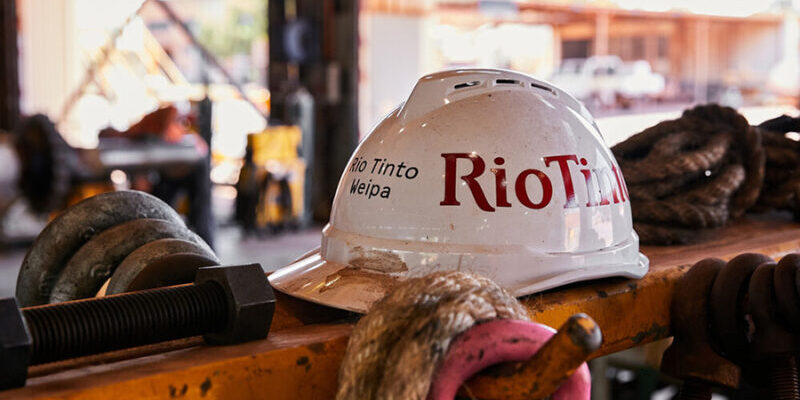
Rio Tinto CEO Jakob Stausholm Steps Down Amid Cost Control Tensions
Rio Tinto and CEO Jakob Stausholm have agreed to part ways, following growing tensions over his reluctance to align with board priorities—particularly around cost control—despite recent expansions in lithium, copper, and iron ore, according to three sources familiar with the matter.
The world’s second-largest listed mining company surprised investors last week by announcing Stausholm’s departure, stating he would remain in his role until a successor is appointed.
No official reason was given, and sources confirmed the decision was not linked to any scandal. Stausholm had shown no signs of stepping down as recently as two weeks ago during a major industry conference in Spain.
Reuters spoke with six individuals briefed on the board’s thinking or company leadership, all of whom requested anonymity due to the sensitivity of the matter.
Rio Tinto declined to comment, and Stausholm did not respond to requests for comment.
Stausholm took over as CEO in 2021 during a challenging period for the company, following the ousting of his predecessor.
The Danish executive initially won support with a global listening tour and efforts to rebuild key relationships in Guinea and Mongolia, helping to advance iron ore and copper projects. Under his leadership, Rio also secured three significant lithium deals within the past year.
However, as Stausholm’s influence grew, insiders say he became increasingly resistant to board input, often dismissing strategic opportunities the board felt warranted deeper consideration.
One such instance reportedly included rejecting an informal merger approach from Glencore last year.
Another involved hesitancy to review Chinalco’s stake in the company amid shareholder pressure to reconsider Rio’s dual Anglo-Australian listing.
While the board largely supported Stausholm’s growth agenda, it became increasingly concerned about rising costs. Rio’s workforce grew by 22% to approximately 60,000 since his appointment, according to its latest annual report, while revenue fell by over $10 billion.
With iron ore prices expected to soften further, the board believed that controlling costs could no longer be delayed.
According to three sources, the board advised Stausholm to place greater emphasis on cost discipline and operational efficiency. His resistance to shifting focus ultimately led to the mutual decision to part ways.
“The board remains supportive of Rio’s strategy and growth options, including lithium,” one source said. “But cost control is now the priority.”
Investment analysts and shareholders have echoed these concerns. Pendal Group, a Rio investor, highlighted growing staffing costs at both Rio and its rival BHP.
Pendal analyst Jack Gabb noted that Stausholm had stated as recently as February that costs “hadn’t been a focus.”
Rio’s Chief Financial Officer Peter Cunningham reportedly raised internal red flags over spending at a recent executive retreat in Australia.
Still, Stausholm viewed himself primarily as a strategic leader, while the board began to prioritize a more cost-conscious approach.
“Rio has world-class assets but suffers from a bloated bureaucracy, with people just looking for work to do,” one source familiar with internal operations said.
Potential internal successors include iron ore head Simon Trott, Chief Commercial Officer Bold Baatar, and aluminum division leader Jerome Pécresse. According to sources, Pécresse may be favored due to his strong cost-cutting credentials.
“Rio doesn’t need another visionary right now,” one insider noted.
Stausholm’s bold push into lithium—including a $6.7 billion acquisition of Arcadium and over $1 billion spent on two Chilean projects this month—has drawn investor scrutiny, particularly as lithium prices continue to slump.
While demand for the battery metal is expected to rise over the next decade, the success of his long-term bet remains uncertain.
As Rio transitions to new leadership, the focus is shifting from expansion to efficiency—marking a new chapter for the mining giant.